Login
Login
Indian Head Massage for Hair Growth and Scalp Health: What the Science Says
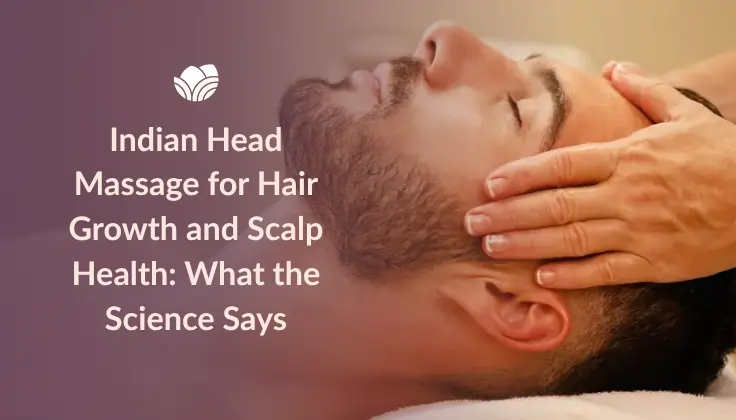
Hair loss in India is not a vanity issue. It is a widespread concern that cuts across age, gender, and geography, and for millions of people, it is deeply tied to the way they live and work. Long hours, chronic stress, nutritional pressures, and an increasingly urban lifestyle have all contributed to a rise in hair thinning, scalp problems, and premature loss. And yet, one of the most effective responses to this modern problem has roots that go back centuries.
Indian head massage for hair growth India is not a new concept dressed in wellness language. It is a practice – known formally as Champissage – that has been part of Indian grooming and healthcare tradition for over a thousand years. What is relatively recent is the scientific literature that explains why it works, and what specifically it does to the scalp and hair follicles that produces results.
This piece examines both sides of that conversation: the traditional knowledge that kept this practice alive across generations, and the emerging research that is beginning to validate it on its own terms.
The Tradition Behind the Practice
Long before the term Champissage entered the wellness lexicon, the practice of massaging the scalp, neck, and shoulders with warm oil was a domestic ritual across the Indian subcontinent. Mothers oiled children’s hair. Barbers included head massage as a standard part of their service. Ayurvedic practitioners prescribed it as part of broader therapeutic protocols for everything from headaches to insomnia.
The word Champissage itself is derived from the Hindi word champi, meaning head massage, which also gave rise to the English word shampoo – a linguistic trace of just how deeply embedded this practice was in the culture.
The technique was brought to the West in the 1970s by Narendra Mehta, a blind massage therapist from India who developed a formalised protocol that incorporated the scalp, face, neck, shoulders, and upper arms. His work introduced Champissage hair health as a codified therapeutic discipline rather than an informal home practice, and it has since been adopted across professional spa environments globally.
What the tradition understood intuitively – that regular manual stimulation of the scalp supported healthier hair – is now being examined through clinical and physiological lenses.
What Science Says About Scalp Massage and Hair Growth
Mechanical Stimulation and Follicle Activation
Hair follicles are dynamic structures that cycle through phases of growth, transition, and rest. The most important of these is the anagen phase – the active growth phase – during which the follicle produces the hair shaft. Research has shown that mechanical stimulation through massage can influence this cycle by stretching the dermal papilla cells at the base of the follicle. This stretching activates gene expression related to hair growth and prolongs the anagen phase.
A study published in ePlasty found that participants who received standardised scalp massage showed increased hair thickness over a 24-week period. The researchers attributed this to the effect of mechanical stress on the dermal papilla, suggesting that regular manual pressure – not just oils or products – directly influences follicle activity.
Circulation and Nutrient Delivery
One of the most well-established benefits of head massage hair growth benefits relates to blood flow. The scalp is supplied by a network of small blood vessels that deliver oxygen and nutrients to the follicles. When circulation is poor – whether due to stress, tension, or sedentary habits – the follicles receive less of what they need to maintain healthy growth.
Massage directly improves local circulation by dilating the superficial blood vessels in the scalp. This increases nutrient and oxygen delivery to the follicle bed, creating a more favourable environment for sustained hair growth. For individuals whose hair loss is linked to poor scalp perfusion – a pattern increasingly observed in urban, high-stress populations – this effect is particularly significant.
Dihydrotestosterone and Hormonal Factors
In androgenetic alopecia, the most common form of hair loss in both men and women in India, the hormone dihydrotestosterone (DHT) plays a central role. DHT binds to receptors in the hair follicle, progressively shrinking it until it can no longer produce a visible hair shaft. Some research suggests that scalp massage may influence the local hormonal environment of the follicle by improving blood flow and reducing the concentration of DHT in the scalp tissue. While this mechanism is still being studied, it represents a potentially important pathway through which scalp massage hair loss India treatments may provide benefit beyond simple relaxation.
Sebum Regulation and Scalp Health
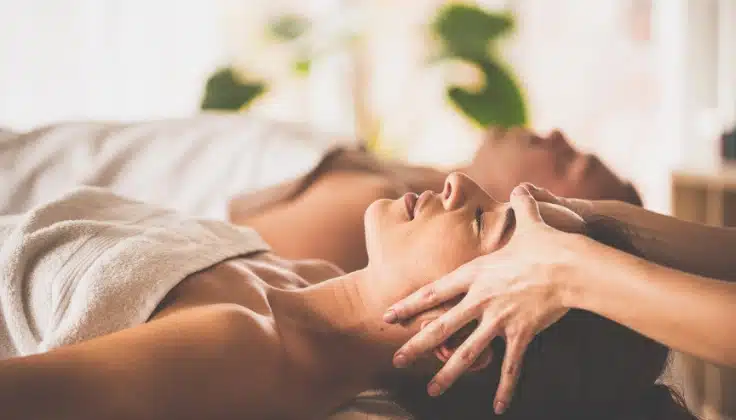
The scalp relies on the sebaceous glands to produce sebum – a natural oil that lubricates the hair shaft and maintains the integrity of the scalp skin. Poor sebum distribution, whether caused by tension, infrequent washing, or blocked pores, contributes to scalp conditions including dryness, dandruff, and inflammation that can compromise the follicle environment.
Massage stimulates the sebaceous glands and helps distribute sebum evenly across the scalp surface. When combined with the application of traditional oils such as coconut, sesame, brahmi, or amla – all of which have documented properties relevant to scalp health – the effect is enhanced further. This combination of mechanical stimulation and topical nourishment is precisely what the Ayurvedic tradition has long recommended.
The Stress Connection: Why It Matters More in India Than You Think
Any honest discussion of hair loss in India must address stress. The country has one of the highest rates of workplace stress globally, and the physiological consequences of chronic stress include measurable effects on hair growth cycles.
When the body is under sustained stress, elevated cortisol levels disrupt the normal cycling of hair follicles, pushing a disproportionate number of them into the telogen phase – the resting phase – prematurely.
This condition, known as telogen effluvium, results in diffuse hair shedding that often appears two to three months after a stressful period. For working professionals in India’s major cities, where work pressure, commute fatigue, and disrupted sleep are common, this cycle of stress-related shedding can become chronic.
This is one of the reasons scalp massage hair loss India has particular relevance beyond its direct mechanical effects. Massage activates the parasympathetic nervous system, which counteracts the stress response.
It reduces cortisol levels, lowers heart rate, and promotes the physiological state in which the body can carry out its maintenance and repair functions – including the normalisation of hair growth cycles.
For individuals experiencing stress-related hair loss, regular massage therapy addresses both the downstream effects on the scalp and the upstream hormonal disruption that is driving them.
What a Professional Indian Head Massage Session Involves
Understanding what actually happens during a professional session helps clarify why it produces results that casual self-massage often does not match.
A formal Champissage hair health session typically covers the scalp, neck, shoulders, face, and upper arms. This broader scope is not incidental. The neck and shoulders hold significant tension for most working professionals, and the blood supply to the scalp passes through vessels in the neck. Releasing tension in the upper body creates the conditions for improved scalp perfusion.
The scalp itself is worked using a combination of techniques including firm circular movements across the entire surface, pressure applied to specific marma points identified in Ayurvedic tradition, gentle traction on sections of the hair to stimulate the follicle base, and rhythmic tapotement to activate circulation.
When warm oil is incorporated, the therapist works it into the scalp during the massage, allowing the combination of heat, manual pressure, and the active compounds in the oil to penetrate the follicle environment more effectively than surface application alone.
A typical session lasts between 45 and 60 minutes. The effects on the scalp are cumulative, meaning that regular sessions over weeks and months produce more sustained results than single appointments.
The Role of Oil in Champissage
The use of oil in Indian head massage is not merely cultural. Many of the oils traditionally used in Champissage have properties that directly support Indian head massage for hair growth India outcomes.
Coconut oil penetrates the hair shaft more effectively than most other oils due to its molecular structure, reducing protein loss and improving the resilience of the hair fibre. Brahmi oil has been shown in studies to stimulate hair follicle proliferation and extend the anagen phase. Amla oil, derived from the Indian gooseberry, is rich in vitamin C and antioxidants that protect the follicle from oxidative stress. Bhringraj oil, often called the king of herbs for hair in Ayurvedic texts, has demonstrated in research the ability to promote hair follicle activity at a comparable rate to some pharmaceutical interventions.
When a trained therapist uses these oils in the context of a structured massage protocol, the combination of physical stimulation and botanical actives creates a synergistic effect on scalp health that neither approach achieves independently.
How Tattva Wellness Spa Delivers This Experience
For those seeking a professional Indian head massage in India, the quality of delivery matters as much as the frequency of sessions. Tattva Wellness Spa offers a relevant and well-matched option for individuals looking to incorporate head massage into a regular wellness routine.
Tattva operates within premium hotel properties across India – including Marriott, Radisson, Hilton, Taj, and ITC group hotels – bringing consistency of environment and therapist standard to a treatment that varies widely in quality across the market. This is significant because the results attributed to head massage hair growth benefits depend on correct technique, appropriate pressure, and systematic coverage of the scalp – none of which can be assumed in an unregulated standalone setting.
Within Tattva’s treatment menu, Indian head massage is offered as part of a broader range of head, face, and body therapies. Sessions incorporate trained technique and, where relevant, traditional oils chosen for their compatibility with the client’s scalp condition. The calm, private environment of a hotel spa setting also enhances the parasympathetic response that is a core component of the treatment’s stress-reducing benefit.
For working professionals experiencing scalp massage hair loss India concerns driven by stress or occupational tension, the accessibility of Tattva’s locations – bookable around work schedules – removes the barrier that often prevents people from seeking consistent care. Gift vouchers are also available, making Tattva a practical choice for those who want to offer a genuinely functional wellness gift to someone dealing with hair or scalp concerns.
What Results Are Realistic and Over What Timeframe
It is worth being direct about what Indian head massage can and cannot achieve. It is not a treatment for severe alopecia areata or significant androgenetic hair loss without adjunct medical intervention. It will not reverse years of follicle miniaturisation in a single course of treatment.
What it does, consistently and measurably, is improve the conditions in which hair follicles operate. Circulation improves. Tension reduces. Stress hormones decrease. Follicle stimulation occurs. Scalp health – sebum balance, skin integrity, inflammatory status – improves. Over time, these cumulative improvements create an environment in which the hair the body is capable of growing is expressed more fully.
Most individuals who commit to regular sessions – at least once every two weeks over a minimum of three months – report visible improvements in hair texture, reduced shedding, and a healthier scalp condition. These are the realistic and meaningful outcomes that Champissage hair health delivers when practised consistently.
Quick Questions Answered
Does Indian head massage actually help with hair growth? Yes, with nuance. Research supports the role of scalp massage in stimulating dermal papilla cells, improving follicle circulation, and extending the active growth phase of the hair cycle. Results are cumulative and most visible with regular sessions over several months. Indian head massage for hair growth India is an evidence-supported practice, not merely a traditional belief.
What is Champissage and how is it different from a regular scalp massage? Champissage hair health refers to the formalised system of Indian head massage developed by Narendra Mehta, which extends beyond the scalp to include the neck, shoulders, face, and upper arms. It follows a structured protocol using specific techniques and, typically, therapeutic oils. It produces more consistent results than informal scalp massage because of its systematic coverage and trained technique.
Can scalp massage help with stress-related hair loss? Yes, and this is one of its most important applications in the Indian context. Scalp massage hair loss India treatments address stress-related hair shedding both directly – by improving follicle environment – and indirectly, by reducing cortisol and activating the parasympathetic nervous system, which helps normalise the disrupted hair growth cycles associated with chronic stress.
Which oils are most effective in Indian head massage for hair growth? Brahmi, bhringraj, amla, and coconut oil all have documented properties relevant to scalp health and hair growth. The choice of oil should be guided by scalp condition – dry, oily, or sensitised – and ideally recommended by a trained therapist.
How often should I get a head massage for hair growth benefits? For head massage hair growth benefits to be meaningful, regularity matters more than session length. Fortnightly sessions are a practical minimum for most people. Those with significant stress-related hair loss or active scalp concerns may benefit from weekly sessions initially before reducing frequency once the condition stabilises.
Where can I get a professional Indian head massage in India? Tattva Wellness Spa, located within premium hotel properties across India, offers professional Indian head massage as part of its established treatment menu. The hotel-based setting ensures consistent quality, trained therapists, and a therapeutic environment that supports the full benefit of the treatment.
Popular Blogs