Login
Login
Benefits of Sports Massage Therapy
Modern fitness culture has changed the way people train. Workouts are more intense, schedules are tighter, and recovery is often ignored until pain or fatigue becomes unavoidable. Many people now understand that performance is not built only inside the gym. Recovery plays an equally important role.
That is where the many sports massage therapy benefits become especially relevant, and a proper muscle recovery massage is not simply about relaxation. It is a structured therapy designed to support circulation, reduce muscular tension, improve tissue mobility, and help the body recover from physical stress. Athletes have used these techniques for decades, but today, even office workers, runners, cyclists, weightlifters, and fitness beginners are increasingly turning towards sports massage as part of their regular wellness routine.
According to research published in the Journal of Athletic Training, massage-based recovery therapies may reduce delayed onset muscle soreness by nearly 30% after intense physical activity. Similar findings published by the National Institutes of Health have shown that recovery-focused massage can support improved circulation and reduce perceived muscular fatigue after exercise.
The reason is fairly straightforward. Training creates controlled stress inside muscles and connective tissue. Recovery is the process through which the body repairs and strengthens itself afterwards. Without adequate recovery, the body accumulates fatigue faster than it can repair itself.
Understanding What Sports Massage Actually Does
Many people assume that a sports massage is simply a stronger version of a regular massage, but that is inaccurate. While traditional relaxation massages are primarily designed to reduce stress, encourage relaxation, and create a sense of overall wellbeing, athletic and performance-focused massage therapies often serve a different purpose. These athletic massage therapy treatments are generally more targeted in their approach, with a greater emphasis on supporting muscular recovery, improving movement quality, enhancing circulation, and addressing areas of physical tension created by training or repetitive activity.
A therapist typically works on areas affected by repetitive strain, overuse, tightness, restricted movement, or post-workout soreness. The pressure, rhythm, and techniques used during the massage are often adapted depending on the client’s activity level and recovery needs. For example, a long-distance runner may require focused work on the calves, hamstrings, and hip flexors, while a weightlifter may need deeper attention around the shoulders, lower back, quadriceps, and glutes. The purpose is not merely temporary comfort. The objective is functional recovery and a better quality of life.
Faster Muscle Recovery After Intense Training
One of the most recognised sports massage therapy benefits is improved recovery speed after physical exertion. When muscles are heavily used, microscopic tissue damage occurs naturally. This is a normal part of training adaptation. However, accumulated tension and reduced circulation can slow down recovery if the body remains under constant stress.
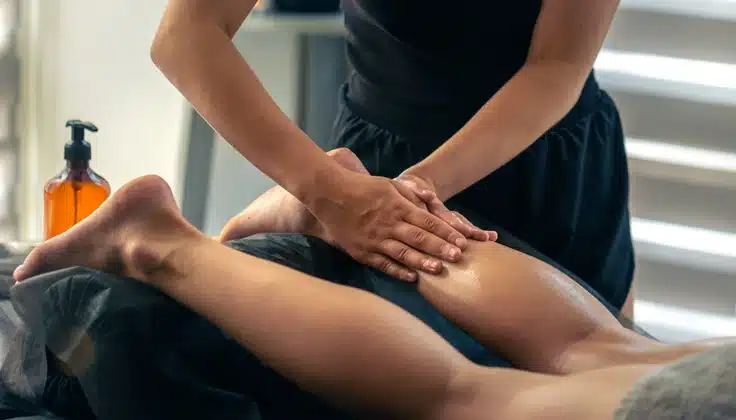
A well-executed muscle recovery massage helps improve blood circulation to fatigued muscles. Better circulation allows oxygen and nutrients to reach tissues more effectively while assisting the removal of metabolic waste products that build up after strenuous exercise.
Research from the American Massage Therapy Association suggests that post-exercise massage may improve circulation by nearly 25%, helping reduce stiffness and muscular tightness after intense training sessions.
Many athletes notice that they feel lighter, less stiff, and more mobile after recovery-focused massage sessions. This becomes particularly useful during periods of frequent training, sports tournaments, marathons, or physically demanding work schedules.
Reduced Muscle Tightness and Improved Flexibility
Muscles naturally tighten after repetitive movement or strength training. Over time, this tightness can restrict movement quality and place unnecessary stress on joints. One of the most practical benefits of a sports massage therapy is the restoration of movement efficiency, as tight muscles and restricted soft tissues often create compensatory movement patterns that gradually affect posture, joint mobility, exercise technique, and overall physical performance.
Over time, these limitations can place additional stress on surrounding muscles and joints, increasing the likelihood of discomfort and inefficient movement. For example, tight hip flexors may alter pelvic alignment and affect lower back mechanics during walking, running, or strength training, while restricted shoulder mobility can interfere with overhead movement patterns, making everyday activities and athletic performance more challenging than they need to be.
Sports massages help release muscular adhesions and tissue stiffness that may limit flexibility. As tissues become less restricted, movement quality improves naturally. This is one reason why many athletes combine stretching, mobility work, and a recovery massage within the same recovery programme. The goal is not merely flexibility for appearance but it is flexibility for movement efficiency and injury prevention.
Improved Circulation and Recovery Quality
Circulation plays an enormous role in muscular recovery because during physical activity, muscles require increased oxygen delivery and nutrient support. Recovery therapies that encourage healthy circulation can therefore support better overall recovery quality. Massage techniques stimulate blood flow mechanically through tissue manipulation. Improved circulation may help reduce feelings of heaviness, fatigue, and muscular congestion that commonly occur after intense exercise.
According to studies referenced by the National Library of Medicine, improved circulation after massage may contribute to reduced inflammation markers and improved muscle function recovery. This becomes particularly beneficial for people who combine physically demanding lifestyles with sedentary work environments. Long hours of sitting after training often worsen stiffness and recovery delays. A structured athlete massage therapy routine helps counterbalance that pattern.
Better Injury Prevention Through Recovery
Most injuries do not happen because of one isolated workout. They develop gradually through repetitive overload, tightness, restricted mobility, poor recovery, or movement compensation, and this is why recovery should never be treated as optional. Regular sports massage sessions help identify muscular tension patterns before they become larger problems. Areas with chronic tightness, reduced mobility, or movement imbalance often become noticeable during therapy.
The Ministry of Youth Affairs and Sports in India has increasingly highlighted the importance of sports science, recovery, and physiotherapy support within athlete development programmes, especially as India continues expanding its sports infrastructure and athlete support systems. For recreational athletes as well, the principle remains the same, as consistent recovery is often cheaper and easier than recovering from an injury later.
Mental Recovery Matters Too
Intense training schedules also place stress on the nervous system. Sleep disruption, mental fatigue, irritability, and reduced motivation are common during periods of overtraining or insufficient recovery. Massage therapy helps activate the parasympathetic nervous system, which supports relaxation and recovery processes within the body.
Many people report improved sleep quality after a recovery massage session. Better sleep directly affects muscular repair, hormonal balance, mood stability, and overall athletic performance. This is one reason why professional athletes often integrate massage into broader recovery strategies that include hydration, nutrition, sleep, mobility, and stress management.
People often assume it is only useful for elite sports professionals, but that is no longer true, because today, many individuals experience muscular strain due to modern lifestyles rather than competitive sports alone. Desk jobs, poor posture, commuting stress, gym training, weekend sports, running clubs, and long working hours all contribute to muscular fatigue. Even beginners who have recently started exercising often experience soreness, tightness, and reduced mobility.
In such cases, sports massage therapy benefits extend beyond performance enhancement. The therapy helps support healthier movement patterns, reduces physical discomfort, and improves overall body awareness.
Choosing the Right Recovery Routine
Massage cannot compensate for chronic sleep deprivation, poor hydration, inadequate nutrition, or excessive overtraining. However, it can significantly support the recovery process when combined with healthier routines. The most effective recovery programmes are usually consistent rather than extreme, and that means maintaining regular movement, proper sleep, adequate hydration, structured exercise programming, and recovery-focused options like muscle recovery massages throughout the year rather than only during periods of pain or burnout.
At Tattva Wellness Spa, guests often combine wellness therapies with structured relaxation routines to maintain long-term physical and mental balance. Depending on individual recovery goals, therapies such as Deep Tissue Massage and Swedish Massage are commonly chosen to support muscular relaxation and recovery. People often celebrate intensity while ignoring recovery, and that mindset rarely works for long.
The body performs best when stress and recovery remain balanced. Training breaks the body down temporarily. Recovery is what allows it to rebuild stronger. That is why the long-term sports massage therapy benefits extend far beyond temporary relaxation. Better movement quality, improved flexibility, reduced muscular fatigue, enhanced circulation, improved sleep, and injury prevention all contribute towards more sustainable physical performance.
Whether someone is training professionally, exercising recreationally, or simply trying to maintain a healthier lifestyle, investing in recovery is rarely wasted effort. The strongest bodies are usually the ones that recover well, not just the ones that train hard.
Quick Questions Answered
How often should you get a sports massage?
The ideal frequency depends on your activity levels, training intensity, and recovery goals. Many active individuals find that a sports massage every two to four weeks helps support muscle recovery and maintain mobility. Those preparing for events or training heavily may benefit from more frequent sessions.
Are sports massages painful?
Sports massages typically use more focused techniques and firmer pressure than relaxation-focused therapies because they are designed to support muscular recovery and physical performance. However, the treatment is always tailored to the individual’s needs, activity levels, and preferences. A qualified therapist will adjust the pressure and techniques to ensure the session remains effective, safe, and comfortable throughout.
Can sports massages help with gym soreness?
Yes. One of the most recognised sports massage therapy benefits is helping reduce post-workout soreness and muscular stiffness after intense exercise. Improved circulation and reduced muscle tension can support a more comfortable recovery process. Many gym-goers include sports massage as part of their overall fitness routine.
Is sports massage only for athletes?
No. Athletic massage therapy can benefit anyone experiencing muscular fatigue, tightness, reduced mobility, or physical stress from exercise and everyday activities. Office workers, runners, gym enthusiasts, and physically active individuals often find it equally useful. The therapy is designed to support movement and recovery, regardless of fitness level.
Does sports massage improve flexibility?
Yes. Regular sports massage sessions may help improve tissue mobility by reducing muscular tightness and restrictions in the soft tissues. Better movement quality can contribute to improved flexibility over time. When combined with stretching and regular exercise, the benefits can be even more noticeable.
Popular Blogs