Login
Leg Compression Therapy in Gurgaon: A New Way to Recharge Tired Legs
Leg compression therapy uses controlled air pressure to support circulation and natural lymphatic drainage while helping ease leg heaviness, fatigue and muscular tightness. It can be a considered addition to recovery routines for working professionals, frequent travellers and physically active individuals. This guide explains how the therapy works, its potential benefits, session duration, frequency and safety considerations, helping you understand whether it suits your wellness needs.
Long commutes, extended hours at a desk and demanding work schedules can leave the legs feeling heavy by the end of the day. For people who spend considerable time standing, travelling or moving between professional commitments, physical fatigue can gradually become part of their daily routine. Active individuals may experience a similar feeling after strenuous exercise or training. Leg Compression Therapy offers a structured way to address this feeling of tiredness through controlled pressure and release. Rather than relying on manual massage, this treatment uses specialised boots that compress different areas of the legs in sequence. Understanding how the process works, what it can offer, and when it may be appropriate helps you make an informed choice.
What Is Leg Compression Therapy?

Leg compression therapy uses air-filled boots to apply controlled pressure to different parts of the lower limbs. The pressure is delivered in a sequence, followed by release, creating a rhythmic sensation across the legs. Our Leg Compression Therapy experience focuses on four areas: the feet, lower calves, upper calves and thighs. This targeted approach is designed to support circulation and natural lymphatic drainage while helping ease the heaviness, fatigue, and tightness that can follow after prolonged standing, travel, or physical activity. Although compression therapy is also used in clinical settings for specific medical conditions, a wellness session serves a different purpose. It should not be considered a substitute for medical assessment or treatment when symptoms persist.
How Does Leg Compression Therapy Work?
The process begins when the compression boots are fitted around the legs. Four independent air chambers inflate and deflate in a controlled sequence, applying pressure to the foot, lower calf, upper calf and thigh. As each chamber compresses and releases, the sensation moves through the legs in a wave-like pattern. This repeated action is intended to encourage fluid movement through the lower limbs and support circulation. The experience is generally restful, allowing you to remain seated or reclined while the equipment works through its programmed cycles. The pressure and duration should remain appropriate for the individual, making an initial consultation and disclosure of relevant health concerns important parts of the process.
What Are the Benefits of Leg Compression Therapy for Tired and Heavy Legs?
The leg compression therapy benefits described in our recovery experience centre on comfort, circulation, and physical recovery.
- Relief from leg heaviness: Rhythmic compression can help ease the feeling of heavy legs after long periods of standing, sitting, or travelling.
- Support for circulation: Sequential pressure is designed to encourage blood flow through the lower limbs.
- Natural lymphatic drainage: The compression-and-release cycle supports fluid movement through the lymphatic system.
- Muscle recovery: The treatment may help ease muscular soreness and tightness following physical activity.
- Reduced physical fatigue: The experience provides focused rest for legs that feel tired after a demanding day.
Individual responses vary, and these benefits should not be interpreted as a guarantee of results or as treatment for an underlying medical condition.
Who Can Consider Leg Compression Therapy?
Compression therapy for tired legs may appeal to people whose daily routines place sustained demands on their lower limbs. Working professionals who spend long hours at desks or on their feet may appreciate the opportunity to pause and focus on physical comfort. Frequent travellers may explore it as part of a broader recovery routine, while athletes and fitness enthusiasts may consider it alongside appropriate rest and other recovery practices. However, recurring swelling, unexplained pain, or persistent heaviness should not automatically be attributed to everyday fatigue. These symptoms warrant medical assessment before considering a wellness treatment.
What Happens During a Leg Compression Therapy Session?
A session begins with a discussion about your health, comfort and suitability for the treatment. Once the boots are positioned comfortably, the equipment applies pressure through its individual chambers in a controlled sequence. The experience progresses through the feet, lower calves, upper calves, and thighs. You can rest while the boots inflate and release, creating a rhythmic compression sensation. Our team can guide you through the process and address any concerns before the session begins. If you experience pain, numbness or unusual discomfort during the treatment, inform the team immediately so the session can be reviewed or stopped.
How Long Should a Leg Compression Therapy Session Last?
The appropriate duration depends on the intended experience, individual comfort, and professional guidance. Our available session options are:
| Therapy | Session Duration | Price |
|---|---|---|
| Leg Compression Standard | 20 minutes | ₹1,500 |
| Leg Compression Extended | 40 minutes | ₹2,500 |
These durations let guests choose an experience that fits their available time and recovery preferences.


How Frequently Can You Have Leg Compression Therapy?
Our recommended starting frequency is one to two sessions per week. Active or athletic guests may consider more frequent sessions according to their needs and suitability. The right frequency is not necessarily the highest possible frequency. It is important to consider your comfort, health history, and overall recovery routine rather than assuming that more sessions will always provide greater benefits.
Leg Compression Therapy for Athletes and Working Professionals
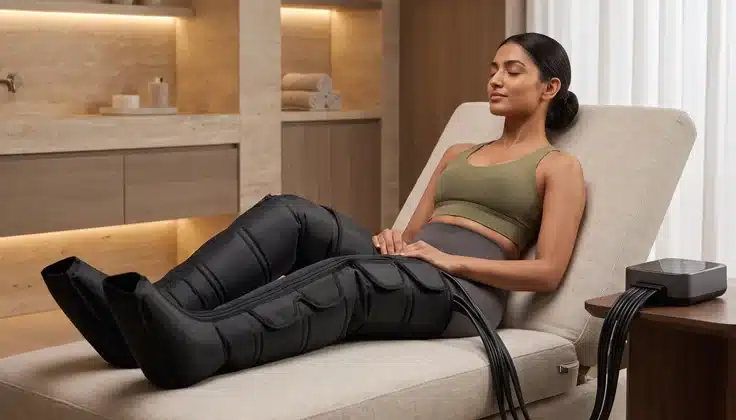
For athletes, leg compression therapy can become one part of a recovery routine that includes appropriate rest, hydration, nutrition, and training management. The rhythmic compression may help ease muscular fatigue after demanding physical activity. For working professionals in Gurgaon, long commutes, extended office hours and time spent standing can make dedicated recovery time valuable. A structured session offers an opportunity to rest while giving attention to tired legs. Our approach focuses on a guided experience that complements everyday wellbeing habits rather than replacing movement, exercise, or medical care.
Who Should Avoid Leg Compression Therapy?
Leg compression therapy is not suitable for everyone. Guests with a history of blood clots, peripheral artery disease or uncontrolled cardiac conditions should obtain medical clearance before proceeding. Pregnant guests also require medical clearance. Before your session, disclose relevant medical conditions, medications, recent surgery and other health concerns during the consultation. If you have unexplained swelling, persistent pain or suspected circulation problems, seek medical advice before using compression equipment.
Where to Experience Leg Compression Therapy in Gurgaon
When searching for leg compression therapy near me, consider more than the session duration or price. Look for clear information about the treatment process, equipment hygiene, staff guidance, health screening and available session options. Our Leg Compression Therapy experience at Tattva Wellness Spa on Golf Course Road, Gurugram, uses sequential air compression to support circulation and lymphatic drainage while helping ease tired, heavy legs. If you are considering leg recovery therapy in Gurgaon, confirm availability and session details with your preferred location before making an appointment. Choosing an experience that explains its process clearly and considers your individual suitability can help you make a more informed decision about your recovery routine.
Frequently Asked Questions
1. What is leg compression therapy used for?
Leg compression therapy uses controlled air pressure to support circulation and fluid movement through the legs. It may help ease feelings of heaviness, fatigue, and muscular tightness after travel, prolonged standing or physical activity. Persistent pain or swelling should be assessed by a healthcare professional.
2. How long does a leg compression therapy session take?
Session duration varies according to the provider and treatment options. We offer 20-minute and 40-minute sessions. The appropriate option depends on your comfort, needs and suitability. We advise you to follow the guidance provided before beginning your session.
3. How often should I have leg compression therapy sessions?
We recommend starting with one to two sessions per week. Active or athletic guests may get it more frequently, depending on their needs and suitability. Your session frequency should reflect your circumstances and professional guidance rather than a fixed expectation.
4. Is leg compression therapy suitable after exercise?
Leg compression therapy may complement a recovery routine by helping ease muscle soreness and fatigue. However, it does not replace adequate rest or medical assessment when needed. If you have an injury, unexplained swelling or significant pain after exercise, consult a healthcare professional before proceeding.
5. Who should avoid leg compression therapy?
Guests with a history of blood clots, peripheral artery disease or uncontrolled cardiac conditions should seek medical clearance. Pregnant guests also require medical clearance before proceeding. Always discuss relevant health concerns during the initial consultation so that suitability can be assessed before the session begins.
Popular Blogs