Login
Infrared Sauna vs Cold Plunge: Which Is Better for Muscle Recovery?
Infrared saunas and cold plunges support muscle recovery in different ways. Infrared sauna therapy uses heat to promote relaxation, circulation and relief from muscle tension, while cold plunges may help reduce post-workout soreness and improve perceived recovery. The better choice depends on workout intensity, recovery goals, individual tolerance and health considerations. For some people, combining heat and cold therapy under professional guidance may be suitable.
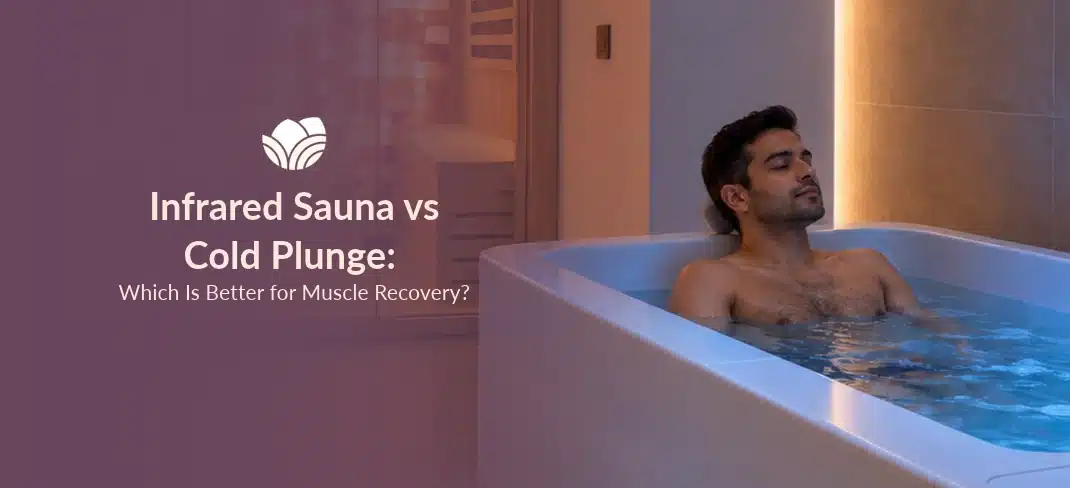
After a demanding workout, a long commute or hours spent on your feet, the body often needs time to recover. Stiffness, tired muscles and lingering soreness can affect how comfortably you move the next day. Infrared sauna and cold plunge therapy offer two different approaches to post-exercise recovery, but they are not interchangeable. When comparing infrared sauna vs cold plunge, the better choice depends on your goal. Heat provides a warming environment that may ease muscular stiffness and encourage relaxation, while cold-water immersion has stronger evidence for reducing perceived muscle soreness after exercise. Understanding these differences helps you choose a recovery approach that suits your routine.
How Does Infrared Therapy Work?

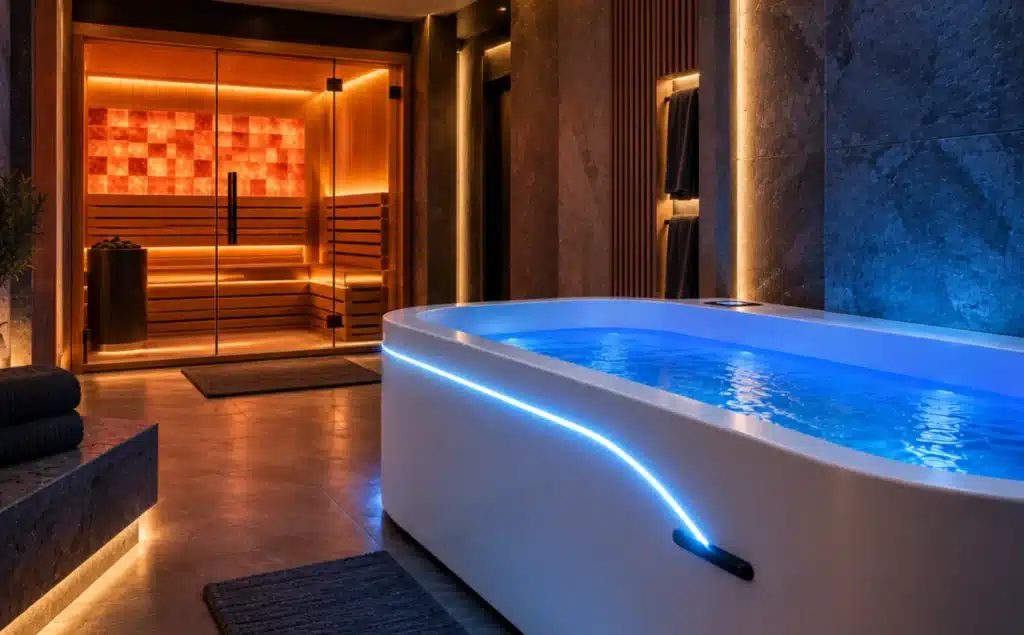
Infrared sauna therapy uses infrared energy to warm the body in a dry environment. The experience encourages sweating and provides sustained warmth that many people find relaxing after physical activity. Our Himalayan Salt Infrared Sauna combines infrared heat with natural Himalayan salt brick panels. The 40-minute session concludes with a relaxing shower, allowing the body to cool down comfortably. Potential infrared sauna benefits include easing muscular stiffness, supporting circulation and promoting relaxation. Heat may help tight muscles feel more comfortable, although evidence specifically establishing infrared sauna as a method of accelerating post-workout muscle repair remains limited.
Understanding Cold Plunge Therapy
Cold plunge therapy involves immersing the body in chilled water for a brief, guided period. The sudden temperature change produces an immediate response, often accompanied by faster breathing and increased alertness. Our Cold Plunge Therapy uses water temperatures between 10°C and 15°C, with guided breathwork to help guests manage the initial sensation. Beginners are advised to start with one minute, while experienced guests may stay immersed for up to three minutes. The listed 20-minute service includes the broader experience, not continuous immersion. Among the potential cold plunge benefits, it most consistently supports short-term relief from perceived muscle soreness following strenuous exercise. However, the effects vary between individuals, and reduced soreness does not necessarily mean that muscles have fully recovered.
How Heat and Cold Therapies Affect the Body?
Heat and cold create different physiological responses. Warmth encourages blood vessels near the skin to widen and can help promote muscular comfort. Cold exposure temporarily constricts blood vessels and triggers an alerting response. This distinction explains why heat vs cold therapy should be considered in relation to the desired outcome. Heat may suit someone seeking relaxation after a tiring day, while cold immersion may be more relevant after strenuous exercise when managing soreness is the priority.
Infrared Sauna vs Cold Plunge: Key Differences
| Factor | Infrared Sauna | Cold Plunge |
|---|---|---|
| Experience | Dry, enveloping warmth | Chilled water immersion |
| Primary focus | Relaxation and muscular comfort | Short-term relief from soreness |
| Service duration | 40 minutes | 20 minutes |
| Exposure guidance | Follow the guided session | Beginners: 1 minute; experienced guests: up to 3 minutes |
| Typical response | Sweating and warmth | Cold sensation and controlled breathing |
These durations describe the respective services, not equivalent periods of direct heat or cold exposure.

Benefits for Muscle Recovery and Soreness
For people experiencing stiffness after exercise, infrared sauna for muscle recovery may provide a comfortable way to unwind. The warmth can encourage relaxation, although research has not established that infrared sauna directly repairs exercise-related muscle damage. Cold plunge for muscle soreness has stronger evidence for short-term relief, particularly following demanding training. A 2025 systematic review of 55 randomised controlled trials found that certain cold-water immersion protocols reduced delayed-onset muscle soreness. The results varied by protocol, and further research is needed to understand how these findings translate into different training routines.
Which Therapy Is Better After a Workout?
The most suitable option depends on how you feel and what you want from recovery.
- For stiffness and relaxation: Himalayan Salt Infrared Sauna may provide a soothing experience after a physically demanding day.
- For post-workout soreness: Cold Plunge Therapy may help reduce the perceived intensity of muscle soreness.
- For general fatigue: Rest, adequate sleep, hydration and appropriate nutrition remain essential.
People focused on building muscle should also consider the timing and frequency of cold immersion. Some research suggests that repeatedly using cold-water immersion immediately after resistance training may reduce muscle growth adaptations. It may therefore be more appropriate to use it selectively rather than after every strength workout.
Sauna vs Cold Plunge for Athletes
Athletes often need to recover between demanding training sessions or competitions. Cold immersion may help manage soreness when another physical effort is approaching, while heat can provide a relaxing experience after training. However, reduced soreness does not necessarily mean that strength, coordination or performance has returned to normal. Athletes working towards muscle growth should weigh the potential effects of frequent cold immersion against their training goals. The decision should reflect the type of exercise, competition schedule and individual response.
Session Duration and Temperature Differences
Our Himalayan Salt Infrared Sauna is a 40-minute service, while our Cold Plunge is a 20-minute service. The plunge operates between 10°C and 15°C, with recommended immersion ranging from one minute for beginners to up to three minutes for experienced guests. Follow the team’s guidance on sauna exposure and temperature. During cold immersion, remain within the recommended duration and never extend the session simply to increase the intensity.
Can You Combine Infrared Sauna and Cold Plunge?
You can combine Infrared Sauna and Cold Plunge through a structured Contrast Therapy session when appropriate. Our Energise ritual follows the sequence of Himalayan Salt Infrared Sauna followed by a guided Cold Plunge, with controlled breathing supporting the transition. Combining the two is not automatically more effective than choosing one. Guests should discuss their experience level and health considerations before selecting a Contrast Therapy session.
Safety Precautions for Sauna and Cold Plunge
Both therapies require appropriate screening. Guests should disclose medical conditions, pregnancy, recent surgery, medications and other relevant health concerns before beginning. Cold immersion requires particular caution for people with cardiovascular disease, uncontrolled hypertension or certain circulation-related conditions. Pregnancy is also a reason to avoid cold plunge under our guidance. Sauna use requires medical clearance for certain cardiovascular conditions, uncontrolled hypertension, pregnancy and implanted electronic devices. Avoid sauna sessions during fever, acute illness or severe dehydration. Enter the plunge slowly, maintain steady breathing and exit immediately if you experience dizziness, numbness, breathing difficulty or unusual discomfort. Do not adjust the temperature yourself or take an immediate hot shower afterwards. For sauna sessions, stay hydrated, remove metal accessories, cool down gradually and shower after the session.
Which Recovery Therapy Should You Choose?
The answer to infrared sauna vs cold plunge depends on your recovery goals. Heat may be suitable when relaxation and muscular comfort are priorities, while cold immersion has stronger evidence for short-term relief from post-exercise soreness. Neither replaces adequate rest or guarantees complete recovery. A consultation can help determine whether an individual therapy or a guided contrast ritual is appropriate for your needs. The most useful recovery approach is one that aligns with your goals, comfort and health.
FAQs
1. Should I choose an infrared sauna or a cold plunge if my muscles feel sore after the gym?
Your choice depends on what you need after a workout. An infrared sauna may help ease muscle tightness and encourage relaxation, while a cold plunge may reduce perceived soreness after exercise. Consider your workout intensity, recovery goals and comfort with heat or cold before choosing either therapy.
2. Is it better to use a cold plunge immediately after weight training?
A cold plunge may help manage muscle soreness after demanding training, but using it immediately after every strength session may not suit everyone. Some evidence suggests frequent cold-water immersion after resistance exercise could interfere with muscle-building adaptations. If building strength and muscle is your priority, discuss your recovery routine with a qualified professional.
3. How long should I stay in an infrared sauna or cold plunge for recovery?
Our Himalayan Salt Infrared Sauna session lasts 40 minutes, while our Cold Plunge session lasts 20 minutes, including guidance. These are session durations, not recommended exposure times. Cold immersion itself should be brief and guided, particularly for beginners, who should start with around one minute rather than pushing through discomfort.
4. Can I use an infrared sauna and cold plunge on the same day?
Yes, some recovery routines combine both, but the sequence and intensity matter. Our Energise ritual combines an Infrared Sauna with a guided Cold Plunge. If you are new to either therapy, start cautiously and speak with our team about suitability before trying contrast therapy, especially if you have an underlying health condition.
5. Are infrared saunas or cold plunges suitable for beginners?
Both can be approached gradually, but neither requires you to tolerate extreme temperatures to benefit. Beginners should follow professional guidance, stay within recommended limits and stop if they feel unwell. Before starting, tell the spa team about relevant medical conditions, medications or recent illness so they can help assess whether the session is appropriate.
Popular Blogs