Login
What Is Contrast Therapy and How Does It Work?
Contrast therapy is a structured wellness practice that alternates heat and cold to create a controlled change in temperature. Traditionally known as contrast bath therapy, it involves moving between warm and cold environments. Modern approaches can combine infrared sauna heat with cold-water immersion. The process may support physical recovery, ease the feeling of muscle fatigue and provide an invigorating sense of renewal. At Tattva, we combine Himalayan Salt Infrared Sauna warmth with guided Cold Plunge experiences, with the duration, temperature and sequence adapted to the selected ritual.
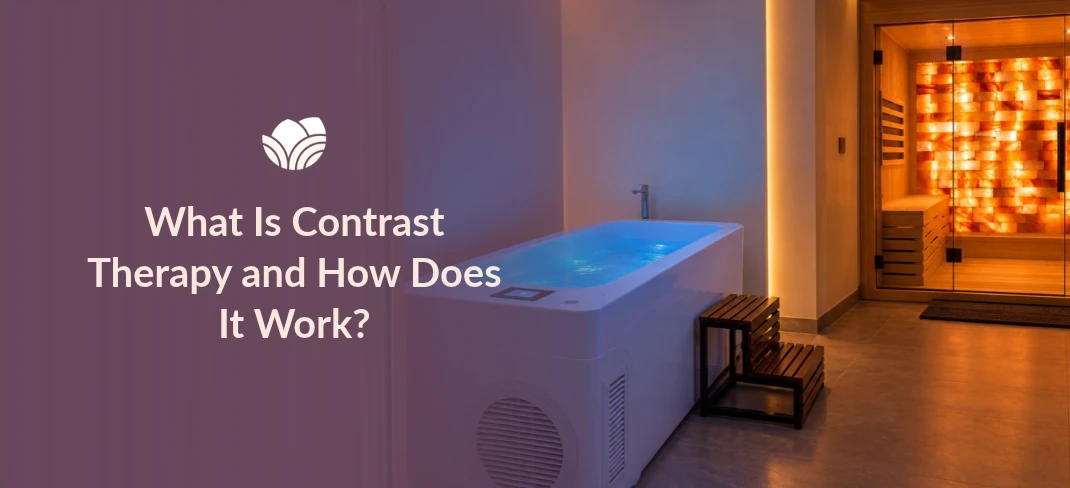
Contrast therapy is a structured approach to recovery that alternates between heat and cold. Traditionally, contrast bath therapy involves moving between warm and cold water. Today, the same principle can be adapted through different thermal experiences, including sauna heat followed by cold-water immersion. The idea is to expose the body to controlled changes in temperature rather than remaining in one environment throughout the experience. These transitions create different physiological responses and can form part of a considered recovery routine. Research on contrast water therapy has mainly focused on exercise recovery. Some studies have found improvements in perceived soreness and fatigue compared with passive rest, although the evidence does not establish contrast therapy as superior to every other recovery method.
What Is Contrast Therapy?
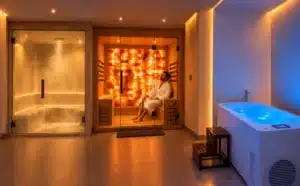
If you are searching for what is a contrast therapy, it refers to the deliberate alternation between heat and cold for a defined period. A traditional contrast bath uses alternating warm and cold-water immersion. Modern approaches can use other forms of heat and cold. The underlying principle remains the same: the body moves from warmth into cold and, depending on the protocol, back into warmth again. Our approach uses a Himalayan Salt Infrared Sauna and guided Cold Plunge to create this contrast. The heat provides a period of warmth before the body transitions into cold-water immersion. The sequence is structured rather than improvised, with the duration and exposure determined by the selected experience.
How Does Contrast Therapy Work?
The body responds differently to heat and cold. Heat increases the body’s thermal load and encourages sweating, while cold-water immersion produces an immediate response to the drop in temperature. Cold exposure can influence breathing, heart rate and cardiovascular responses, which is why temperature and exposure need to be controlled. Alternating between the two creates the characteristic contrast experience. Rather than viewing the transition as a challenge to endure, it is more useful to approach it as a controlled sequence where breathing, comfort and exposure are carefully considered.
How Do Heat and Cold Work Together?
The heat phase allows the body to settle into warmth before the more pronounced sensation of cold. Our Himalayan Salt Infrared Sauna uses dry infrared heat within a Himalayan salt-lined environment. The experience is designed to encourage sweating while helping ease muscular soreness, stiffness and tension and supporting relaxation and recovery. The cold phase then introduces a distinct change in temperature. Our Cold Plunge is maintained between 10°C and 15°C, with guided breathwork supporting the transition into the cold. Beginners are advised to start with a one-minute immersion, while experienced plungers may go up to three minutes.
Infrared Sauna and Cold Plunge Contrast Routine
There is no single sequence that defines every contrast treatment. The duration and number of transitions depend on the experience.
Our Energise ritual follows a straightforward sequence:
Infrared Sauna → Cold Plunge
For guests already familiar with these recovery experiences, Recovery follows two cycles:
Infrared Sauna → Cold Plunge → Infrared Sauna → Cold Plunge
The 90-minute Recuperate ritual adds steam between two Cold Plunge experiences:
Infrared Sauna → Cold Plunge → Steam Bath → Cold Plunge
Both Recuperate and Recovery are intended for guests already familiar with Cold Plunge, Infrared Sauna or Energise Contrast Therapy.
What Happens to the Body During Heat and Cold Exposure?
Temperature changes require the body to continuously adjust. During heat exposure, the body works to release heat through mechanisms such as sweating and changes in blood flow. Cold exposure produces a contrasting response, including changes in blood vessel behaviour, breathing and cardiovascular activity. This physiological contrast is one reason the experience can feel both calming during the warm phase and invigorating during the cold phase. Research into contrast water therapy suggests potential value for certain aspects of post-exercise recovery, but outcomes vary according to the protocol and the individual.
What Are the Benefits of Contrast Therapy?
The most relevant research around contrast therapy relates to physical recovery following exercise. Studies have reported potential improvements in perceived muscle soreness, fatigue and some measures of recovery when contrast water therapy is compared with passive recovery. However, research also shows that contrast therapy is not consistently superior to other recovery approaches. Our experiences are therefore designed around practical wellbeing rather than promising a medical outcome. The combination of heat and cold can provide an invigorating experience for people managing demanding workouts, physically tiring routines, frequent travel or the general fatigue that can accompany busy schedules. Our contrast experiences are intended to support general wellbeing and physical recovery, not diagnose or treat medical conditions.
What Can You Expect During a Contrast Therapy Session?
Every experience begins with a brief consultation to understand your health, comfort level and suitability for the selected service. The team provides guidance before the session, while factors such as temperature and exposure are regulated according to the experience. The cold phase may feel intense initially. Slow, steady breathing can help you settle into the change in temperature. You should never feel that you need to push through significant discomfort. If you experience dizziness, breathing difficulty, numbness, nausea or an unusual reaction, you should inform the team immediately. The experience can then be adjusted or discontinued where necessary.
How Long Does Contrast Therapy Take?
The overall duration depends on the selected experience. Our current contrast experiences include:
- Energise: 60 minutes
- Recovery: 80 minutes
- Recuperate: 90 minutes
The duration covers the considered experience around the therapies, while individual exposure is guided according to the requirements of the treatment. For the Cold Plunge itself, beginners start with one minute, while experienced plungers may go up to three minutes.
Who Should Avoid Contrast Therapy?
Heat and cold both place physiological demands on the body, making health screening an important part of the experience. Our consultation specifically asks about pregnancy, cardiovascular disease, uncontrolled blood pressure or arrhythmia, epilepsy or seizure disorders, Raynaud’s or peripheral vascular disease, history of blood clots, recent surgery, fever or acute illness, implanted electronic devices, open wounds and other relevant health conditions. Guests should always provide complete and accurate health information before beginning. Certain circumstances may require medical clearance or mean that a particular experience should not be undertaken.
Contrast Therapy at Tattva
For someone searching for contrast therapy near me, the quality of the experience is about more than finding somewhere with heat and cold therapy facilities. The way the experience is structured matters just as much. We focus on creating a measured progression between warmth and cold, with consultation, guidance and appropriate monitoring throughout the experience. Our aim is to make the transitions purposeful and comfortable rather than turning temperature exposure into a test of endurance. For people balancing workouts, long working hours, travel and everyday physical demands, contrast therapy can become a considered way to pause, reset and reconnect with the body.
FAQs
Is contrast therapy the same as contrast bath therapy?
The principle is similar, but the method can differ. Traditional contrast bath therapy alternates between warm and cold water. Contrast therapy can use other forms of heat and cold. Our approach combines infrared sauna warmth with guided cold-water immersion.
Does contrast therapy help with muscle recovery?
Research suggests that contrast therapy may help aspects of recovery following exercise, particularly perceived soreness and fatigue when compared with passive recovery. However, results vary between studies, so it is best considered one part of a broader recovery routine rather than a guaranteed outcome.
Is contrast therapy suitable for beginners?
Beginners can experience an appropriate contrast treatment after completing the required consultation and suitability screening. Our more involved sequences are recommended for guests who are already familiar with Cold Plunge or Himalayan Salt Infrared Sauna experiences.
How often can you have contrast therapy?
Our contrast experiences are positioned as occasional recovery rituals, generally up to once a week depending on the selected experience. Individual suitability can vary, so frequency should be considered alongside experience level and personal health circumstances.
Does contrast therapy help with muscle recovery?
Research suggests that contrast therapy may help aspects of recovery following exercise, particularly perceived soreness and fatigue when compared with passive recovery. However, results vary between studies, so it is best considered one part of a broader recovery routine rather than a guaranteed outcome.
Popular Blogs